

Table of Contents
Puppy food for healthy growth should support steady development, not rushed weight gain. Food choices during this stage affect joints, digestion, and long-term body condition. Start with a complete diet made for puppies, then pay attention to calorie density and mineral balance, especially calcium and phosphorus.
This matters even more for medium, large, and giant breeds because extra weight lands on a skeleton that is still developing. The best puppy food for growth still has to match the puppy’s expected adult size. A good formula can still be the wrong fit if it drives rapid weight gain or constant loose stool.
A common pattern is a puppy that looks big for its age and always seems hungry but also has soft stools or an intermittent limp after play. I think first about portion size, treats, and whether the formula matches the puppy’s expected adult size. Stop extras, measure meals, and schedule a veterinary visit if diarrhea repeats, energy drops, or lameness persists.
Quick answer: Any complete puppy food that meets AAFCO or FEDIAF growth standards works well, as long as you feed the right amount. Purina Pro Plan Puppy is the easiest steady starting point for most puppies; Hill’s Science Diet Small Bites often works best for sensitive stomachs. The biggest factor in healthy growth isn’t the brand — it’s keeping your puppy lean and feeding measured portions.

What Research Supports Puppy Food for Healthy Growth?
For large breed puppies, controlled energy and careful mineral balance matter because excess intake can contribute to developmental orthopedic disease. In Great Danes, controlled studies found that excessive calcium, with or without proportionate phosphorus, disrupted skeletal development and produced osteochondrosis-like changes, and very high calcium also altered calcium metabolism in growing dogs (Schoenmakers et al, 2000; Lauten et al, 2002; Hazewinkel et al, 1991).
DHA, an omega-3 fatty acid found in fish oil, has evidence for supporting puppy learning and retinal development. A growth-feeding study in Beagle puppies found improved performance on cognitive and psychomotor tasks with DHA-rich fish oil fortification, and a more recent controlled trial also reported improved learning on an object discrimination test with DHA-concentrated supplementation (Zicker et al, 2012; Rodrigues et al, 2023).
Standards help reduce risk. AAFCO nutrient profiles set targets for growth diets, and AAFCO feeding trials describe how nutritional adequacy can be substantiated through growth feeding. FEDIAF publishes similar nutrient guidance for growth.

How I chose and ordered these five foods
I ranked these diets by how reliably they support steady body condition and stable stools across many puppy types. I also favored brands with a long history of complete puppy diets that fit established nutrient frameworks and, when applicable, feeding trial support. The best match is the food that keeps your puppy lean and energetic, passing formed stools while allowing for steady growth. Rich foods can backfire if they encourage overeating or frequent switching.
| Food | Best For | Notable Strength |
|---|---|---|
| Purina Pro Plan Puppy Chicken and Rice | A predictable, easy starting point | Consistent results across many puppy types, with DHA support |
| Hill’s Science Diet Puppy Small Bites | Sensitive stomachs or fast eaters | Smaller kibble slows eating; often improves stool quality |
| Royal Canin Puppy Medium Breed | Medium breeds prone to quick weight gain | Structured nutrition with controlled energy density |
| Wellness Complete Health Puppy | Puppies trending heavy for their frame | Steady body condition without pushing rapid gain |
| IAMS ProActive Health Smart Puppy | Budget-conscious, straightforward feeding | Reliable nutrition at a more accessible cost |
1. Purina Pro Plan Puppy Chicken and Rice
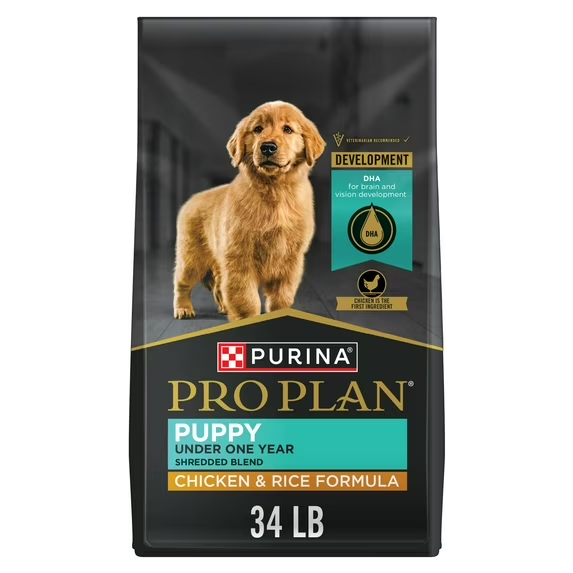
This is my most common starting point because it tends to be predictable for growth and digestion. It gives many families a clear baseline that is easy to keep consistent. What makes it stand out is consistency and a formulation approach that supports steady development, including DHA support. If your puppy is thriving on it, the main job is measuring portions, not adding supplements. This is not a surprising choice and is supported by a number of scientific studies.
2. Hill’s Science Diet Puppy Small Bites
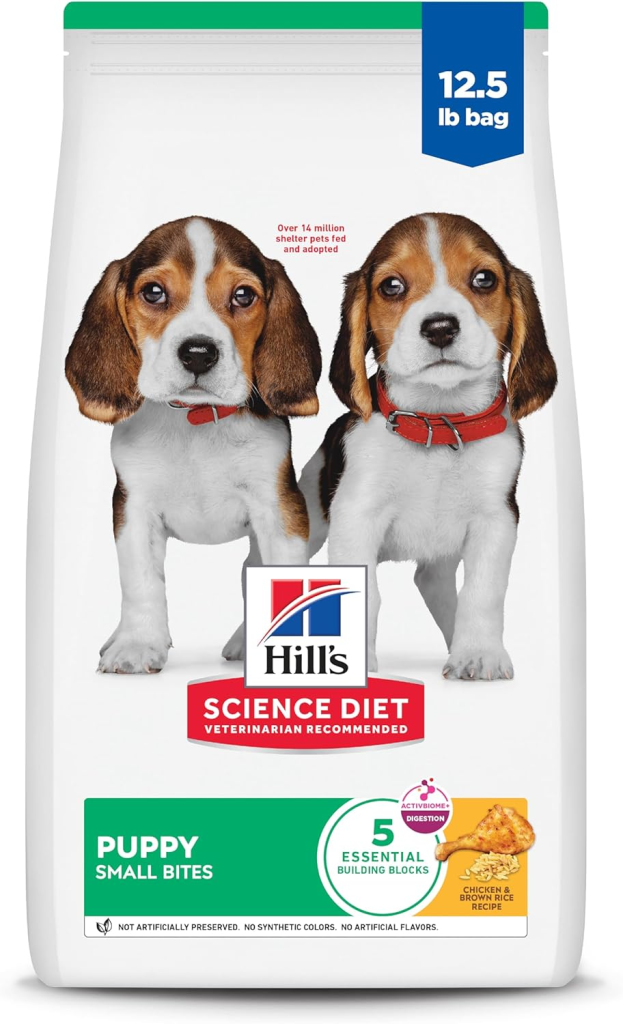
This moves up the list when the gut is sensitive or when a puppy tends to gulp meals. Smaller kibble can help slow eating, which sometimes improves stool quality. Its unique strength is how often it helps families reach formed stools and steady appetite early. That stability makes it easier to judge portions and track true growth.
3. Royal Canin Puppy Medium Breed
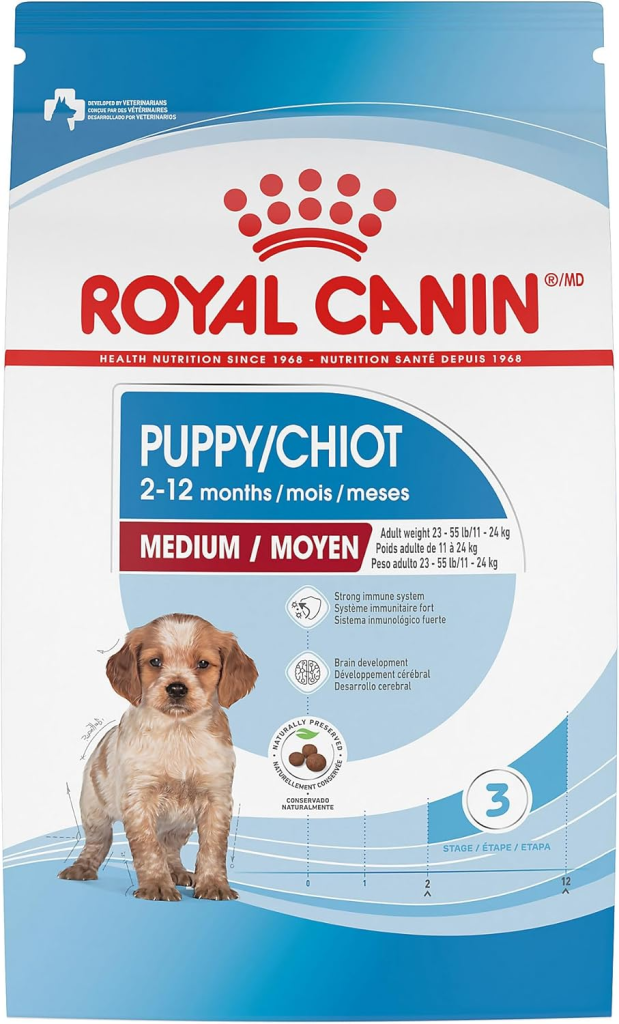
This option shines when you want structured nutrition and controlled energy density. It can be a good fit for medium-breed puppies that gain weight quickly. What feels unique day to day is fewer swings in appetite and stool when the diet is kept consistent. For fast-growing pups, a precise formula can help keep growth steady. Try and see; just change the diet slowly over time to avoid diarrhea.
4. Wellness Complete Health Puppy
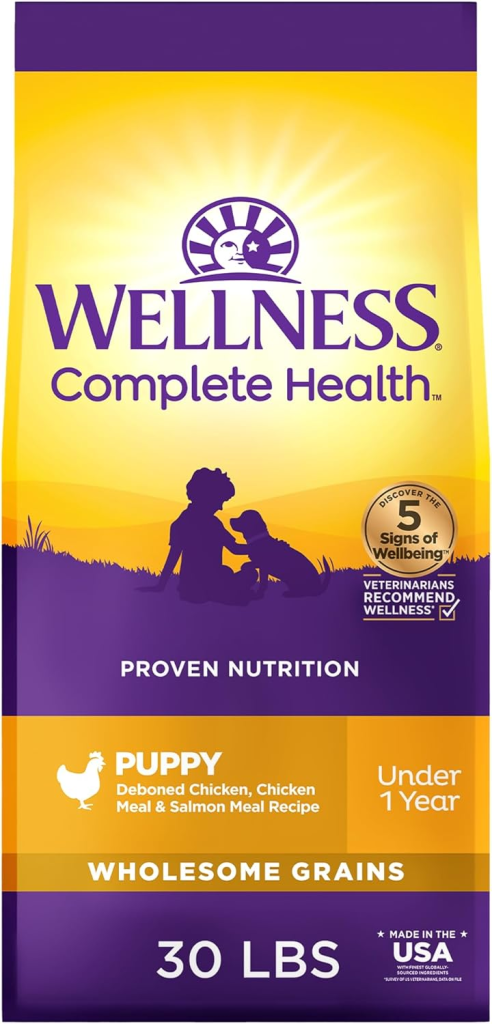
This tends to suit puppies that do best on moderate richness rather than very calorie-dense diets. It can help when a puppy is trending heavy for their frame. Its value is steady body condition support without pushing rapid gain when portions are measured. For many puppies, moderate calorie density is easier to manage than a very rich diet.
5. IAMS ProActive Health Smart Puppy
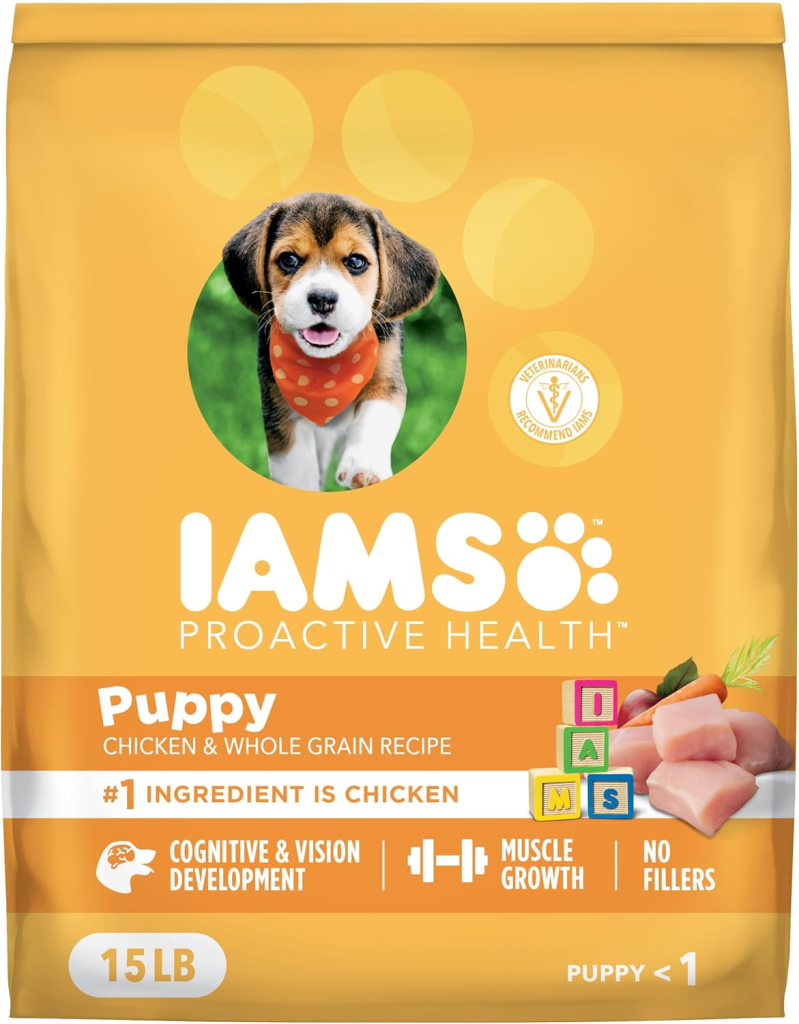
IAMS earns a place here because it can provide reliable puppy nutrition at a more accessible cost. Feeding consistently matters, and affordability can support consistency. Its best fit is the uncomplicated puppy, where the main risk is overfeeding. Use measured meals, transition slowly, and adjust portions if your puppy starts to lose a waist.
What matters more than the brand name
Portion control matters more than which bag you buy:
- Keep your puppy lean — rapid weight gain increases joint load, especially in large and giant breeds.
- Don’t add calcium, bone meal, or growth boosters unless a veterinarian has diagnosed a true deficiency.
- Large and giant breed puppies have a narrower safe range for calcium and phosphorus; excess intake can contribute to abnormal skeletal development.

When should you seek veterinary help?
See a vet if you notice:
• Repeated diarrhea or vomiting
• Visible blood in stool
• Low energy or lethargy
• Persistent limping, joint swelling, or reluctance to rise
Puppies dehydrate quickly, and these signs are worth a same-day or next-day check rather than another food switch.
Further Reading
If you want a deeper understanding of how prevention fits into early puppy health, the article Puppy Vaccination Explained: From First Shots to Adulthood builds on many of the same themes discussed here. It explains why young puppies are especially vulnerable while their immune systems mature, how vaccine timing closes that gap safely, and why missed or delayed boosters can leave protection incomplete. Reading it alongside this guide helps connect everyday illness signs with the preventive steps that reduce risk during the most sensitive months of development.
If you are curious how breed resilience connects to everyday health concerns, the article The 5 Healthiest Dog Breeds and What Owners Should Know adds useful perspective. It explains why some breeds tend to be more durable over a lifetime while also emphasizing that nutrition, preventive care, and early attention to illness often matter more than genetics alone. Reading it alongside this article helps place common health problems in the broader context of long-term wellness rather than breed labels alone.
This article is for educational purposes only and is not a substitute for professional veterinary care. Always consult a licensed veterinarian regarding your pet’s health and nutritional needs. As an Amazon Associate, Vet Explains earns from qualifying purchases.
Was the article helpful?