
Table of Contents
A kitten vaccination schedule is not just a checklist.
Think of it as a carefully timed plan. It’s designed to protect your kitten’s immune system during a vulnerable stretch when the protection they got from their mother is wearing off, but their own immunity isn’t fully built up yet.
A common scenario is a kitten who has had one set of shots and then meets visiting cats, rides in a shared carrier, or explores a friend’s home. Urgency changes if there is low energy, fever, vomiting, diarrhea, or any known exposure to sick cats, because those clues can mean infection is already brewing.
That’s exactly why two kittens of the same age can be at very different levels of risk on any given day, depending on where each one happens to be in that process.
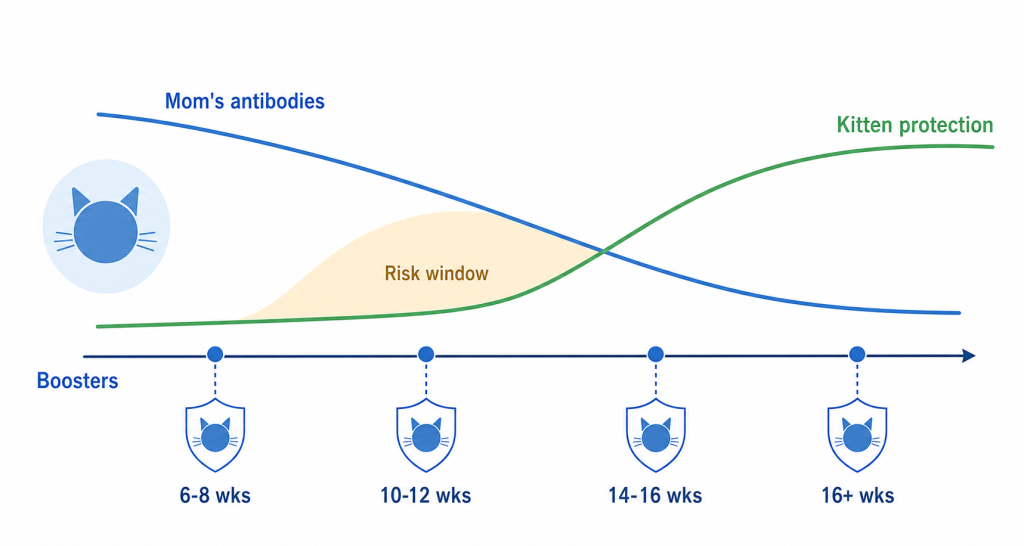
The graph above shows why: most kittens feel perfectly normal right in the middle of their riskiest stretch. Viruses do not announce themselves early, and many contagious diseases spread before a kitten ever looks sick.
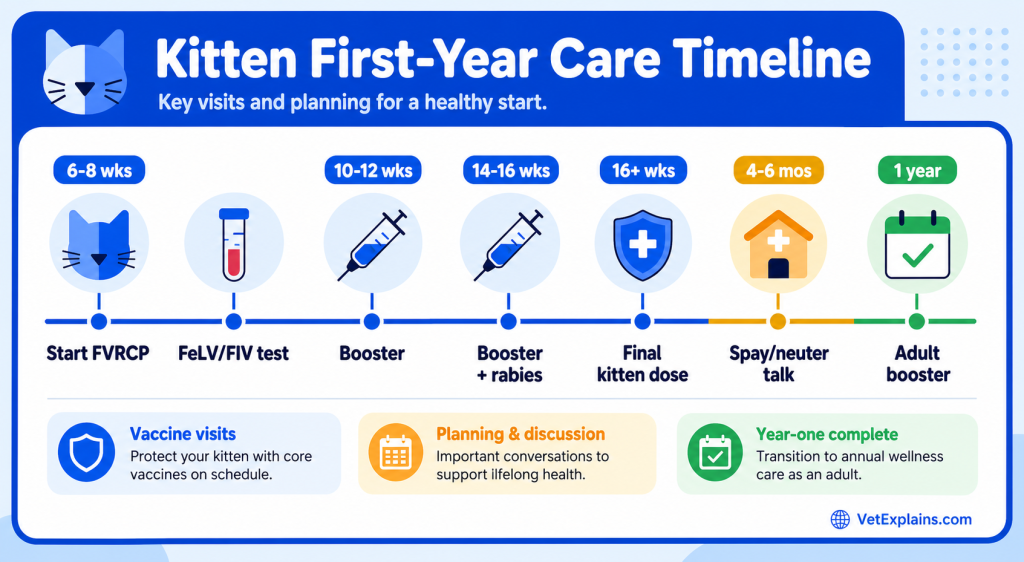
Quick answer: Most kittens start core vaccines (FVRCP: panleukopenia, herpesvirus, calicivirus) at 6-8 weeks, with boosters every 3-4 weeks until at least 16 weeks old. One shot is never enough because maternal antibodies can block early doses — the series works as a relay. Rabies usually follows at 12-16 weeks. Mild drowsiness or a sore spot for a day or two is normal; facial swelling, hives, vomiting, or trouble breathing after a shot is not.
Kitten Vaccination Schedule: When should vaccines start?
Every kitten starts life borrowing its immune defenses from its mother. During the first day or two of nursing, the mother’s first milk, called colostrum, delivers a temporary shield of maternal antibodies. The catch is that this borrowed immunity doesn’t expire on a fixed schedule: one kitten in a litter might lose protection at six weeks, while a littermate holds onto it until ten or eleven, and as long as those antibodies are circulating, they’ll neutralize a vaccine just as readily as they’d neutralize a real virus. This is the core tension behind the kitten vaccination schedule: vaccinate too early and the shot does nothing useful, wait too long and there’s an open gap where the kitten has no protection at all, right as it starts exploring, playing, and meeting other animals.
That’s why vets typically start the series around 6 to 8 weeks, early enough to close the gap quickly but late enough that most kittens can mount a real response. The first appointment does double duty. Alongside the initial vaccine, it’s usually when a vet gets a real first look at the kitten’s overall condition: weight gain, coat, hydration, parasites, any congestion, since any of those can shift how the rest of the schedule gets timed. A kitten who’s underweight or fighting a mild illness may need that first dose delayed a week or two rather than pushed through on schedule.
Why do boosters repeat, and why does the last one matter most?
Repeated boosters are not “extra.” They are a practical way to land the vaccine at the moment maternal antibodies finally drop low enough for the kitten’s immune system to learn the target and build lasting memory. Think of the series as a net cast over several weeks, so even if one dose is blocked, a later dose can still succeed. For many kittens, the final dose is the one that matters most because it is the likeliest to work without interference.
In plain terms, veterinary guidelines suggest starting shots around 6 weeks old, then returning for a booster every 3 to 4 weeks after that. This continues until your kitten is at least 16 weeks old, and sometimes as late as 20 weeks, depending on their risk level and the vaccine brand your vet uses. That final shot matters most, since it is the one most likely to work once any leftover protection from their mother has fully faded. Some vets also recommend one more booster around 6 months to close any remaining gaps for kittens whose maternal antibodies lingered longer than usual.
What is the usual timing for the core vaccines?
| Vaccine | Protects against | Typical timing |
|---|---|---|
| FVRCP (core) | Panleukopenia, herpesvirus, calicivirus | First dose 6-8 weeks; boosters every 3-4 weeks; final kitten dose at 16+ weeks |
| Rabies (core + legal) | Rabies virus — a public health and legal requirement in many regions | First dose 12-16 weeks; paperwork required for travel, boarding, and emergency hospitals |
| FeLV and others (non-core) | Feline leukemia virus; others based on risk | Recommended for cats with outdoor access or exposure to unfamiliar cats; a risk-based conversation with your vet |
Some kittens also receive additional vaccines based on environment, such as higher exposure settings, shelters, or frequent contact with unfamiliar cats. These decisions should feel personalized to risk rather than routine, because not every cat needs every optional vaccine. The best plans match the vaccine choice and timing to what the kitten is actually likely to encounter over the next year.
Do indoor kittens really need FeLV?
FeLV, or feline leukemia virus, spreads mainly through close contact with infected cats, especially sharing saliva through mutual grooming, bites, and shared bowls in some situations. Kittens are uniquely vulnerable because they are more likely to develop persistent infection if exposed when young, and persistent infection can later lead to immune suppression, anemia, and certain cancers. For that reason, multiple feline health organizations discuss FeLV vaccination as a strong consideration in kittens, even though it is classified as non-core in many frameworks.
The indoor-only question is real, and it deserves a straight answer. A kitten who truly lives in an FeLV-negative home with no contact risk is at minimal risk, but “indoor only” can change quickly with a DoorDash, a new roommate’s cat, fostering plans, or an emergency stay outside the home. Many recommendations treat kitten FeLV vaccination as a sensible default, then reassess the need for ongoing boosters as the cat’s actual lifestyle becomes clearer.
This is also where testing earns its place. Many vets run a quick in-house FeLV/FIV blood test at the first visit, especially for kittens with an unknown background, like strays, shelter kittens, or anyone adopted without solid records. Knowing a kitten’s status before the vaccine series starts helps the vet make a more precise call on FeLV vaccination instead of guessing at risk from lifestyle alone.
Is my kitten protected after the first shots?
Most kittens are not reliably protected after the first dose. Early doses may help, but they can also be partially blocked by maternal antibodies, and protection can be inconsistent until the series is complete. In many cases, the immune response becomes far more dependable after the final kitten vaccine at 16 weeks or later, and it can take about one to two weeks after that final dose for protection to peak.
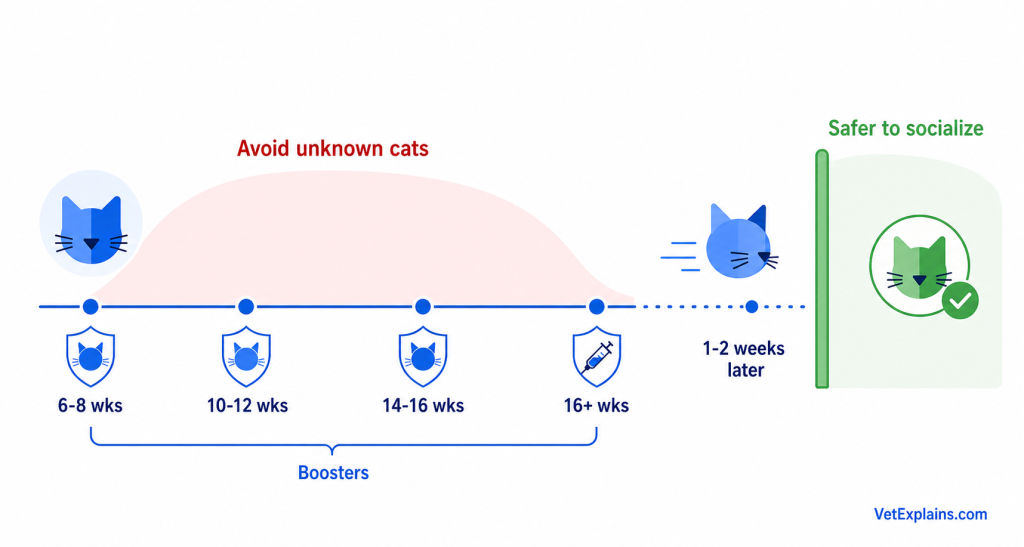
Controlled contact with a healthy, vaccinated resident cat in the same home is different from meeting unknown cats, sharing litter boxes in multi-cat settings, or visiting places where sick cats may have been. If a kitten is still mid-series, it’s safest to avoid situations where you have no way to know the other animals’ vaccination status, illness history, or how clean the shared surfaces really are.
What happens if I miss a vaccine appointment?
Missing a step in the kitten vaccination schedule doesn’t automatically mean starting over, but it does often mean a gap in protection. The right next step is usually to contact a veterinarian or the clinic that gave the earlier vaccine so the series can be continued in a way that fits the product and the kitten’s age. While you are catching up, it helps to act like protection is incomplete and keep exposure risk low, especially around unfamiliar cats and high-traffic animal environments.
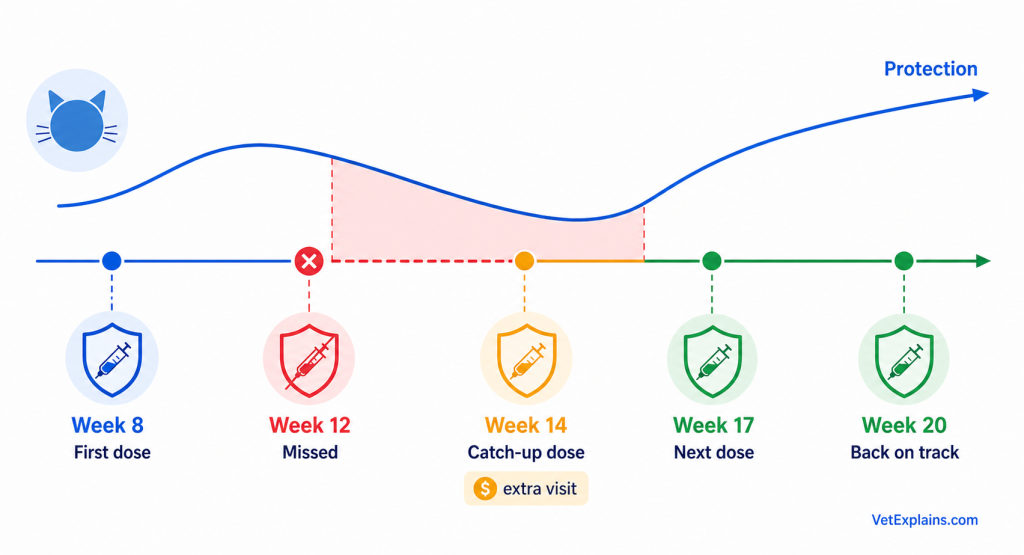
“How late is too late?” is really two questions: how late to begin and how late between doses. If a kitten is already over 16 weeks and never started, guidelines commonly describe either one dose for certain modified live core vaccines or two doses spaced a few weeks apart for inactivated vaccines, because maternal antibodies are expected to be minimal by then. This concern is one reason accurate birthdate estimates matter in adopted kittens, especially when their early history is unknown.
What reactions are normal, and what should worry me?
Mild sleepiness, a small appetite dip, and localized soreness for a day or two are common after vaccines, especially in kittens who were stressed by travel or handling. Some kittens hide more or play less for a short time, then bounce back quickly. A small, firm lump at the injection site can happen and often resolves over the following weeks.
Reactions that need same-day veterinary attention:
• Facial swelling or widespread hives
• Repeated vomiting
• Collapse or sudden extreme weakness
• Difficulty breathing
• Any lump at the injection site that grows, persists, or changes over weeks
Most serious reactions show up within the first few hours after the shot, so keeping a close eye on your kitten for the rest of that day is usually enough. These are uncommon, but early recognition matters. Most kittens sail through vaccination with nothing more than a quiet afternoon.
How do I keep records and plan the rest of the first year?
Vaccine records are more than paperwork. They can determine whether a boarding facility will accept a reservation, whether a grooming shop will schedule, and how smoothly an emergency visit goes when you are stressed and do not have time to remember dates. A clear record also helps avoid unnecessary repeat vaccination when a kitten has already received a dose somewhere else.
It also helps to zoom out and plan the “kitten year” as one preventive health package. Parasite control, spay or neuter timing, microchipping, safe socialization, and the first adult boosters are all tied to the same calendar, so coordinating them reduces missed steps and surprise costs. After that first year of steady visits, most cats settle into a much simpler annual rhythm.
Further Reading
Puppy Vaccination Explained: From First Shots to Adulthood covers the dog-side companion to this article — how the puppy vaccine schedule works, why the timing windows matter, and what reactions are worth calling about. Useful if your household has both a kitten and a puppy, or if you’re curious how the two schedules compare.
Why Is My Cat Peeing Outside the Litter Box: Common Reasons addresses one of the most common concerns cat owners run into in the first year — house soiling that isn’t misbehavior but often a sign of stress, urinary discomfort, or a litter setup that needs adjusting. Worth reading before assuming the worst.
Was the article helpful?